 Skip to content
 - 18th Floor, Yuehu Jinhui Building, No. 225, Liuting Street, Haishu District, Ningbo, Zhejiang, China

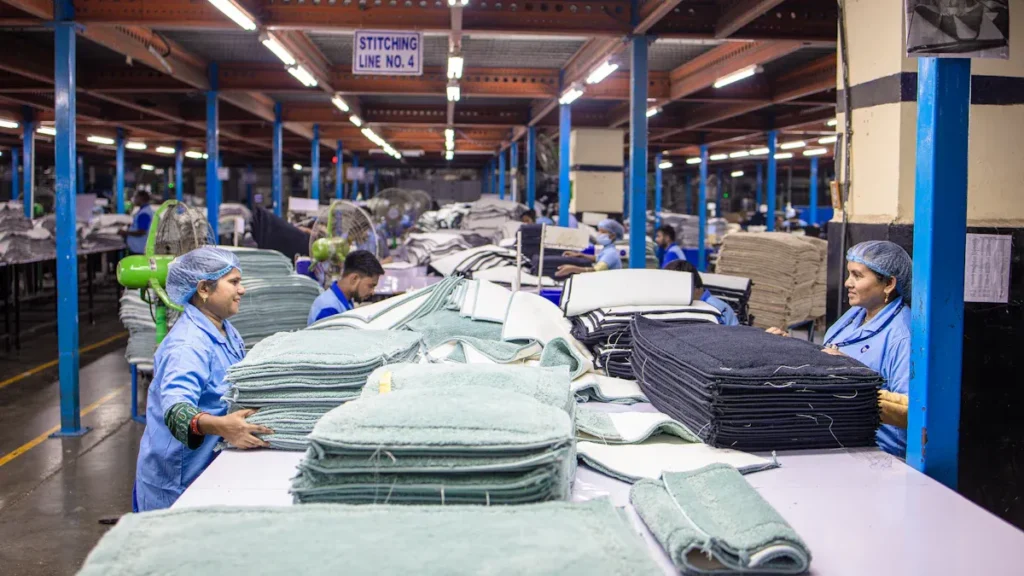
Modern sweater manufacturing combines data-driven production, sustainable sourcing, and precise knitting technology.
Veken — a textile manufacturer under the Ningbo-based Veken Group with its own large-scale sweater factory — delivers up to 500,000 custom sweaters annually with lead times as short as 25 days.
This fact-based guide explains how a modern sweater factory works, using real numbers, clear steps, and actionable insights for wholesale buyers, fashion brands, and private-label apparel businesses.
Key Takeaways (B2B Quick Facts) 📌
500,000 sweaters/year production capacity for stable large-volume supply.
Custom yarn options: wool, cotton, blends, recycled fibers, organic cotton.
Defect rate below 1% thanks to multi-stage quality control.
Sample lead time: 5–7 days, bulk lead time: 7–25 days.
85%+ waste recycling rate, 30% lower energy consumption with upgraded flat-knitting machines.
Certified under OEKO-TEX® Standard 100 & ISO9001.
1. Materials Sourcing: How a Modern Sweater Factory Chooses Yarn
1.1 Yarn Options for Custom Sweater Manufacturing
In modern knitwear production, yarn selection determines texture, durability, and breathability.
Veken offers a wide yarn library sourced from China, Italy, and Turkey, covering both traditional and eco-friendly materials.
Popular yarn options for bulk sweater orders
Pure wool — warm, elastic, suitable for premium winter sweaters
Cotton — soft, breathable, ideal for schoolwear or corporate uniforms
Wool–acrylic blends — cost-effective with stable shape retention
Cotton–polyester blends — durable and easy to maintain
Recycled yarns ♻️ — lower environmental impact
Organic cotton 🌱 — GOTS-compliant supply chains (varies by supplier)
Long-tail keywords included: custom sweater yarn options, sustainable yarn for knitwear manufacturing, wool vs cotton sweaters for bulk orders, recycled yarn factory China
1.2 Annual Sourcing Volumes
A modern-scale sweater facility requires consistent material supply.
Below is Veken’s approximate annual yarn sourcing volume:
| Yarn Type | Annual Volume (tonnes) | Key Source Countries |
|---|---|---|
| Wool | 120 | China, Italy |
| Cotton | 100 | China, Turkey |
| Blended yarns | 80 | China |
High sourcing volumes ensure no material shortages, even for large OEM/ODM sweater orders.
1.3 Certifications (Safety & Compliance)
✔ OEKO-TEX® Standard 100 — materials tested for harmful substances
✔ ISO9001 — consistent management and production procedures
These certifications support safe textile production and help wholesale buyers meet the compliance requirements of EU, UK, US, and Japan.
Long-tail keywords included: OEKO-TEX certified sweater factory, ISO9001 knitwear manufacturer, safe materials for sweater production
2. Knitting Technology: How Sweaters Are Mechanically Formed
2.1 Computerized Knitting Machines
Modern sweater factories rely on top-tier Stoll and Shima Seiki computerized flat-knitting machines.
What these machines can do
Knit up to 12 gauges (3GG–14GG)
Produce jacquard, cable, intarsia, rib, and other complex patterns
Switch styles quickly for small-batch customization
Deliver consistent stitch density for bulk orders
This helps brands respond quickly to seasonal trends, colorway requests, and private-label designs.
2.2 Skilled Artisans Behind the Machines
Even advanced machines require trained technicians.
👕 Technicians monitor tension, color stability, and pattern output.
🧶 Hand-finishing (linking, trimming, washing) ensures comfort and durability.
📐 Experts convert design sketches into machine-readable technical files.
This balance of automation and craftsmanship ensures professional fit, smooth seams, and accurate sizing.
2.3 Production Speeds & Lead Times
| Order Type | Lead Time |
|---|---|
| Sample | 5–7 days |
| Bulk order (2,000 pcs) | 7–14 days |
| Full season order | 25 days |
Each computerized knitting unit produces up to 30 sweaters/day, depending on complexity.
Long-tail keywords included: bulk knitwear production lead time, fast sample development sweater factory, computerized knitting machines China
3. Sweater Factory Quality Control (QC): Numbers & Processes

A modern sweater factory uses a multi-step, data-driven QC system to keep the defect rate below 1%.
3.1 Inline Quality Checks (During Knitting)
Technicians use a recognized four-point inspection method to check:
Thread integrity
Stitch alignment
Color consistency
Measurement accuracy
Panel shape
Issues are corrected immediately to avoid downstream defects.
3.2 Final Inspection (Before Packing)
| Inspection Step | What Happens | Purpose |
|---|---|---|
| Steam setting | Shape stabilized, wrinkles removed | Clean finish |
| Measurement check | Key points (sleeve, chest, body length) | Accurate sizing |
| Visual check | Surface, seams, neckline | No visible defects |
This ensures sweaters arrive retail-ready with consistent fit.
3.3 Packing Audits
Before shipment, auditors verify:
Correct quantities
Size ratio
Colorways
Labels & barcodes
Packaging requirements
Buyers receive a batch report with photos for transparency.
4. Sustainability & Efficiency: How Modern Factories Reduce Impact

4.1 Energy Management
Energy-efficient knitting machines help reduce electricity usage by up to 30%.
LED lighting and monthly monitoring add further reductions.
🌍 Estimated carbon reduction: 200+ tonnes/year.
4.2 Waste Reduction & Material Use
The factory’s waste management practices include:
Yarn scraps reused for samples
Fabric offcuts donated to community groups
Clearly labeled waste bins for easy sorting
These practices support both clean production and community engagement.
4.3 Recycling Rates
| Material | Recycling Rate |
|---|---|
| Cardboard | 98% |
| Plastic cones | 90% |
| Yarn/fabric waste | 80% |
Modern apparel brands increasingly prioritize sustainable sweater manufacturing, and these numbers support compliance for EU and North American buyers.
5. Output & Distribution: How Sweaters Reach Global Markets
5.1 Annual Production Output
A modern sweater factory like Veken maintains stable output:
| Year | Sweaters Produced |
|---|---|
| 2022 | 480,000 |
| 2023 | 500,000 |
Such capacity supports seasonal fashion cycles, large-volume retailers, and private-label clothing brands.
5.2 Export Destinations
Veken exports sweaters to 30+ countries, including:
UK
Germany
France
USA
Japan
Reliable logistics partners ensure on-time delivery for international shipments.
5.3 Custom Orders (OEM & ODM)
Minimum order quantity: 300 pcs
Buyers can choose:
OEM — supply your own tech pack
ODM — develop from Veken’s existing styles
This supports emerging brands, wholesale distributors, and seasonal capsule collections.
Conclusion
Modern sweater manufacturing relies on accurate numbers, certified materials, and data-driven quality control.
Veken’s capacity — 500,000 pieces/year, 25-day lead times, and 85%+ recycling rates — shows how a modern factory operates efficiently while supporting sustainable apparel production.
For brands seeking consistent quality, transparent processes, and scalable production, these practices form a reliable foundation for long-term collaboration.
FAQ
1. Can eco-friendly materials be used for bulk sweater production?
Yes. Options include recycled yarns, organic cotton, and low-impact blends.
2. How is product quality ensured?
Through inline inspections, steam finishing, and packing audits with a defect rate under 1%.
3. Which markets does Veken serve?
Over 30 countries including the UK, Germany, France, USA, and Japan.
