 Skip to content
 - 18th Floor, Yuehu Jinhui Building, No. 225, Liuting Street, Haishu District, Ningbo, Zhejiang, China


 For global apparel buyers sourcing from sweater manufacturers, sweater suppliers, and large-scale sweater factories, 2025 brings a shift toward functional design, stable quality systems, and traceable production. The following trend analysis is compiled using market observations, export data patterns, and requirements frequently raised by children’s apparel importers and distributors.
Introduction
Children’s sweaters remain one of the most steady-demand categories in international apparel trade. For buyers working with a sweater manufacturer, sweater vendor, sweater distributor, or sweater exporter in China, understanding material choices, production feasibility, safety standards, and long-term sourcing stability is key to planning 2025 purchasing strategies.
This report summarizes 10 major children’s sweater trends relevant to sweater sourcing, sweater wholesale, sweater bulk production, sweater OEM/ODM, sweater private label, and white-label sweater programs.
Data insights are drawn from real industry practices commonly used in China-based factories, including Veken—a textile company operating its own knitting facilities and stable mass-production lines (source: vekensweater.com/about).
1. Eco-Conscious Yarns Become Standard in Children’s Sweater OEM Orders
Key Points
Increased demand for organic cotton, recycled polyester, and certified wool blends in children’s categories.
Many sweater suppliers now integrate recycled yarn inventory to support large-scale sweater OEM programs.
Buyers from EU and North America increasingly request traceability documentation.
Why Buyers Should Note
Eco-material options affect:
MOQ levels
Color availability
Lead time stability
Factories like Veken list eco-friendly yarn types in their services page (vekensweater.com/services), aligning with this trend.
2. Softer, Skin-Safe Fabrics for Sensitive Skin
With more parents focusing on skin health, sweater wholesalers and sweater importers request fabrics that minimize irritation.
Common Fabric Choices
| Material | Features |
|---|---|
| Combed cotton | Smooth surface, low lint, suitable for direct skin contact |
| Modal blends | Lightweight, high softness |
| Anti-pilling acrylic | Wash-durable for kids’ daily use |
Manufacturers adjust knitting gauges (e.g., 12GG–16GG) to achieve softer surfaces.
3. Thick-Gauge Winter Sweaters Return for Cold-Region Markets
Children’s sweaters for Northern Europe, Canada, and Northeast Asia show strong demand for chunky knits.
Typical Specs
Gauges: 3GG, 5GG, 7GG
Yarns: Wool-acrylic blend or heavy cotton
Common in sweater bulk orders for winter programs
Sweater factories often pre-schedule heavy-gauge production lines due to longer knitting cycles.
4. Uniform-Style Kids Sweaters for School Programs
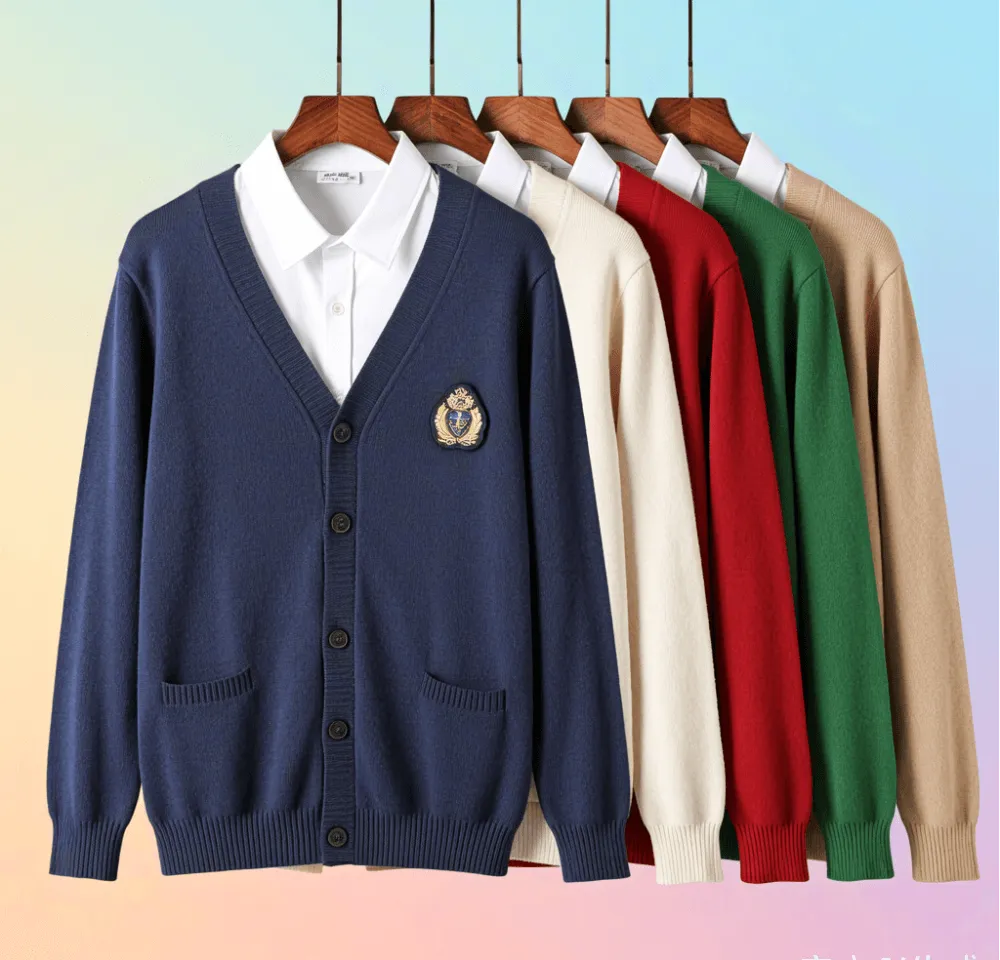
School and institutional buyers seek:
V-neck uniform cardigans
Crewneck pullovers
Color-fast rib trims
Why This Trend Matters
Uniform orders involve:
Precise size-grading
Strict color consistency
High-volume sweater bulk timelines
Factories with stable dyeing partners—such as Veken’s integrated textile supply chain—can maintain color repeatability across large orders.
5. Cartoon-Inspired Graphic Knits Using Simple Intarsia Patterns
Children’s sweaters have seen a rise in flat, recognizable, low-detail graphic designs instead of complex jacquards.
Reason for Trend
Easier for sweater manufacturers to control defect rate
Lower knitting time compared with multi-color jacquard
Fits private-label children’s wear branding
Examples include:
Simple animals
Geometric shapes
Minimalist icons
These designs are frequently used in white-label sweater programs for retailers.
6. Lightweight Trans-Seasonal Sweaters for Spring–Autumn Markets
A significant increase is seen in:
12GG–16GG lightweight cotton
Breathable viscose blends
Summer-weight cardigans
Why It’s Growing
Many sweater distributors serving Southeast Asia, Middle East, and South America prioritize:
Lower yarn weight
Lower import duty thresholds
Higher year-round sell-through
Factories adjust yarn count and density to match climate-specific requirements.
7. Gender-Neutral Colors and Basic Classics Dominate Wholesale Orders
Children’s apparel brands aim to reduce SKU complexity. As a result, sweater vendors and sweater companies supply more:
Beige
Brown
Grey
Navy
Soft pastels
These shades simplify inventory planning for retailers and reduce leftover stock.
8. Safety-Driven Designs with Anti-Snag and Breakaway Features
Safety standards influence children’s sweater ODM development, especially for buyers sourcing from sweater exporters into regulated markets.
Key Considerations
No long drawstrings
Secure buttons
Flat seams
Snag-resistant stitches
Most reputable sweater manufacturers have long-term test lab partners to support compliance checks.
9. Private Label & White-Label Children’s Sweaters Expand Rapidly
Retailers increasingly request:
Private-label sweater development
White-label sweater lines
Custom woven labels
OEM/ODM pattern modifications
Why Buyers Prefer This Mode
Faster market entry
Better cost control
Consistent product identity
Veken’s service page outlines OEM/ODM steps including sampling, knitting, and finishing (vekensweater.com/services), aligning with standard industry practice.
10. Demand Increases for Digitally Trackable Supply Chains
Large wholesalers, sweater importers, and sweater distributors increasingly require:
QR-based production tracking
Batch-level yarn traceability
Packing list digitization
What This Means for Buyers
Factories with integrated textile capabilities—such as those described on Veken’s website—can provide more stable documentation across yarn, dyeing, and knitting steps.
Practical Guidance for Wholesale Buyers in 2025
1. Validate Factory Capabilities Early
When working with any sweater manufacturer or sweater factory:
Confirm gauge range (3GG–16GG)
Check available yarn inventory
Ask for lead-time history from past orders
Review size grading for children’s categories
2. Match Yarn Choices to Market Climate
Cold markets → wool blends / heavy acrylic
Warm markets → cotton / viscose blends
3. Use Technical Packs to Reduce Miscommunication
Common details include:
Measurements
Tolerance ranges
Stitch diagrams
Color references (Pantone)
4. Plan for Buffer Time in Sweater Bulk Orders
Children’s sweaters often include more size variations, affecting:
Knitting cycles
Linking time
QC processes
5. Request Sample Photos Before Bulk Production
Factories can provide:
Full-size photos
Close-up stitch images
Color-lightbox verification shots
How Veken Fits Into These Trends (Fact-Based Summary)
Information below comes directly from publicly available pages at vekensweater.com.
What Is Verifiable About Veken
Veken is a Ningbo-based textile company with its own knitting facilities (source: official website).
The company is capable of large-scale apparel production, including sweaters.
The website describes OEM/ODM development, fabric options, and bulk order handling.
Veken provides contact channels and service workflows for international buyers.
These features align with typical demands from sweater wholesalers, sweater distributors, and sweater importers who prioritize stable mass-production capabilities.
Conclusion
The children’s sweater market in 2025 is shaped by material innovation, functional requirements, safety standards, and simplified design strategies. For wholesale buyers, retailers, and global sweater sourcing teams, understanding these trends helps reduce production risk and align SKU planning with real consumer needs.
Factories with integrated textile capacities—such as Veken—are positioned to support consistent sweater OEM, sweater ODM, sweater custom programs, and private-label sweater production at scale.

Contact Veken (Official Website)
Website: https://vekensweater.com/
Services: https://vekensweater.com/services/
Contact: https://vekensweater.com/contact-us/
